
Why AI Recommendations Matter Now
Search behavior is changing. Instead of typing a few words into Google and comparing ten results, more people now ask an AI tool a full question and get a short answer with a handful of names. Ask ChatGPT for a reliable plumber in Kendall or a family-friendly dentist in Coral Gables, and you will usually see two to five businesses mentioned, often with a sentence about why each one fits.
For the businesses named, that is a powerful moment. The customer has already been told you are a good choice before they ever visit your website. For everyone else, it is a missed opportunity they never see. Google has moved in the same direction with AI Overviews, which summarize answers at the top of many results pages and cite a few sources.
The good news is that the signals AI tools use are understandable, and most of them overlap with good SEO. You do not need tricks. You need to make your business clear, consistent and trusted across the places these tools look.
How Businesses Get Recommended by ChatGPT and Other AI Tools
AI tools build answers from two broad sources. Some knowledge comes from training on large amounts of public text. Many answers now also include live web results, where the tool searches the web, reads relevant pages and summarizes what it finds. Either way, the tool favors information that is clear, consistent and backed by trusted sources.
In practice, that means a few things matter most. Your website should state plainly what you do, where you do it and who you serve. Your business details should match across your website, your Google Business Profile and major directories. Reviews and mentions on reputable sites should confirm that real customers trust you. And your pages should answer the questions customers actually ask, in language that is easy to quote.
When those signals are strong, AI tools can describe your business confidently. When they are weak or contradictory, the tool is more likely to recommend a competitor whose information is easier to verify.

Step One: Make Your Website Easy to Understand
Start with your homepage and core service pages. Within the first few lines, each page should say what the service is, where you offer it and who it is for. A headline like Emergency Plumbing in Kendall and South Miami gives an AI tool far more to work with than a slogan about excellence.
Give each important service its own page with substantial, specific content: what the service includes, typical costs or price ranges, how long it takes, what customers should expect and answers to common questions. Thin pages with a few bullet points give AI tools little to quote and give customers little reason to choose you.
Add structured data, also called schema markup, to describe your business, services, location, hours and frequently asked questions in a format machines read easily. It does not replace good writing, but it removes ambiguity about the basic facts.

Step Two: Keep Your Business Details Consistent Everywhere
AI tools cross-check information. If your website lists one phone number, your Google profile shows another and an old directory still has your previous address, the tool has reason to doubt all of them. Consistency builds confidence.
Audit your business name, address, phone number, website, hours and service list across your website, Google Business Profile, Apple Maps, Bing Places, Yelp, industry directories and social profiles. Fix anything outdated. This same work strengthens your local SEO, so it pays off twice.
Keep your Google Business Profile especially complete and active. Choose accurate categories, list every service, add real photos and post updates regularly. Many AI answers about local businesses lean heavily on profile information.
Step Three: Build Real Signals of Trust
Reviews are one of the clearest trust signals for both people and AI tools. Make it easy for happy customers to leave reviews, ask consistently after completed jobs and respond to every review professionally, positive or negative.
Mentions on other reputable sites help too. Local news features, chamber of commerce listings, industry associations, partner pages and community sponsorships all show that your business is real and respected. These mentions often appear in the sources AI tools read.
Avoid shortcuts like fake reviews or paid listings on low-quality sites. They can damage trust with customers, violate platform rules and make your business look less reliable, not more.

Step Four: Answer the Questions Customers Ask AI
Think about how customers phrase questions to an AI tool. They ask things like how much does a roof replacement cost in Miami, who is the best bilingual accountant in Doral or is it worth repairing an old AC unit. If your website answers those questions directly and honestly, you become a natural source for the answer.
Add FAQ sections to key pages, publish helpful blog posts on common questions and keep answers specific to your area and services. Use plain language and get to the point quickly. A clear two or three sentence answer is far more quotable than a long paragraph that circles the topic.
If you serve Spanish-speaking customers, publish native Spanish versions of your most important pages. Many AI tools answer in the language the customer uses, and Spanish content gives you a chance to be recommended in those answers too.

Step Five: Measure Your AI Visibility
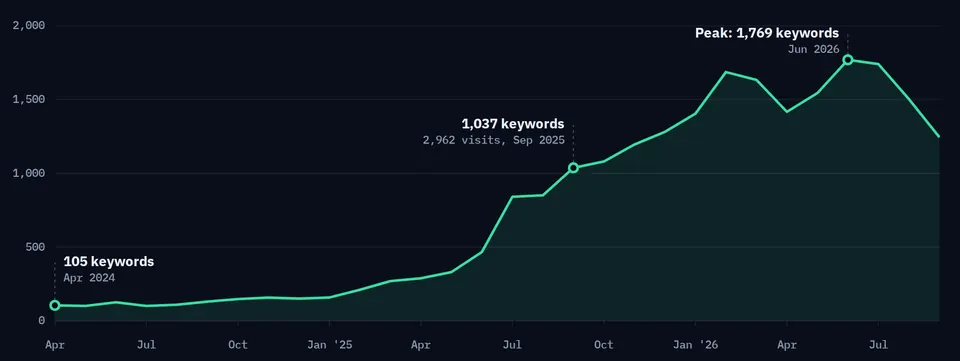
You cannot improve what you do not measure. Make a list of ten to twenty questions customers might ask an AI tool about businesses like yours, then ask them in ChatGPT, Claude, Gemini, Perplexity and Google every month. Note whether your business appears, how it is described and which competitors show up.
Track changes over time rather than reacting to a single answer. AI responses vary, and the trend matters more than any one result. When you publish new pages, fix listings or gain reviews, watch whether your visibility improves.
This is exactly what our AI SEO program does for clients, alongside traditional rankings, so you can see how both kinds of search are working for your business.
Common Mistakes That Keep Businesses Out of AI Answers
The most common mistake is vague messaging. Websites that describe a business as innovative, customer focused and the best in town without ever saying what it does or where give AI tools nothing concrete to work with. Specific, factual language almost always performs better.
The second is neglected listings. Many businesses set up a Google profile and a few directory listings years ago and never revisited them. Old hours, previous addresses and missing services quietly undermine trust in every newer piece of information.
The third is relying on a single page. A homepage that tries to cover every service and every area cannot compete with businesses that have dedicated, detailed pages. Each important service and location deserves its own page with real answers.
The fourth is ignoring Spanish-speaking customers. In Miami, a large share of questions are asked in Spanish. A business with no Spanish content simply cannot appear in many of those answers, no matter how strong its English pages are.
The Bottom Line
Getting recommended by ChatGPT is not about gaming a new system. It is about being the clearest, most consistent and most trusted option in your market, then making that obvious everywhere AI tools look. The same work strengthens your Google rankings, your map visibility and your reputation with customers.
If you want help, our AI SEO team can measure where you stand today, fix the biggest gaps and track your AI mentions every month. And if your website needs a refresh to support all of this, a Fast Lane website can be live in 7 to 10 business days.

Frequently asked questions
Can I pay to be recommended by ChatGPT?
No. ChatGPT, Claude and Gemini do not sell placement in their answers. Recommendations come from what these tools can learn and verify about your business, which is why clear pages, consistent listings and real reviews matter so much.
How long does it take to show up in AI answers?
Most Miami businesses see early movement within two to three months of fixing their website, listings and reviews, with stronger results after six months. AI tools refresh what they know at different speeds, so steady work beats one big push.
Does AI SEO replace regular SEO?
No. AI SEO builds on regular SEO. The same clear pages, local signals and trusted mentions that help you rank on Google are what AI tools read when they decide which businesses to recommend in Miami and across South Florida.
Do Spanish pages help with AI recommendations in Miami?
Yes. Many customers in Miami-Dade and Broward ask AI tools questions in Spanish, and the tools often answer from Spanish sources. Native Spanish pages give your business a chance to appear in those answers.