
Mobile AR
ARKit and ARCore experiences that place true scale products, furniture and architecture in a real room.
Some things are hard to sell from a flat photo: a condo that is still a construction site, a yacht docked three states away, a sofa that may or may not fit the living room. Neon Manatee builds AR and VR experiences for iPhone, Android, Apple Vision Pro, Meta Quest and the web, each designed around one clear job, such as helping a buyer understand a space, letting a shopper try a product or training a new hire safely. Every project is scoped and priced up front.
Augmented reality earns its budget when it answers a question a customer cannot answer any other way. Will this table fit? What does the view look like from a high floor before the tower is finished? How does this machine come apart for service? If the experience answers that kind of question, people use it, share it and remember the brand behind it. If it is a novelty, they open it once. We start every AR app development project by naming that question.
Mobile AR is usually the right first step because the hardware is already in everyone's pocket. On iPhone and iPad we build with ARKit and RealityKit, which handle surface detection, lighting estimation and LiDAR depth on supported devices. On Android we use ARCore. For campaigns and product pages where an app download is too much friction, WebXR and AR Quick Look let people place a 3D model in their room straight from a website or a QR code.
Headsets open up a different class of experience. Apple Vision Pro runs visionOS apps that blend windows and 3D content into the room with eye and hand input, which suits premium showrooms, design reviews and immersive presentations. Meta Quest headsets offer standalone VR and color passthrough mixed reality at a much lower price per device, which makes them practical for training programs, events and fleets of headsets. As a VR development company, we help you choose hardware based on audience, budget and how many units you need, not on which device is newest.
The quality of an AR or VR experience depends heavily on its 3D assets. A beautiful model that weighs hundreds of megabytes will stutter on a phone and drain a headset battery. We create or optimize models in standard formats such as USDZ and glTF, reduce polygon counts, bake lighting where possible and test frame rates on real devices, so the experience feels solid in the hand.
Because AR VR app development combines app engineering, 3D production and device testing, builds start at $25,000 in our app estimator. You start with 30 percent down at checkout, and larger programs with estimates above $60,000 begin with a conversation with a senior strategist so the scope, devices and content plan are right before production.
Each capability below is chosen for the moment it serves, whether a buyer is standing in an empty lot, a shopper is on the couch or a trainee is wearing a headset for the first time.
ARKit and ARCore experiences that place true scale products, furniture and architecture in a real room.
visionOS apps with spatial windows, volumes and immersive spaces for showrooms, design reviews and presentations.
Standalone VR and passthrough mixed reality for training, events and deployments across many headsets.
Browser based AR and 3D viewers that open from a link or QR code with no app download required.
Modeling, textures and optimization in USDZ and glTF so scenes load quickly and look right on each device.
Usage analytics and a content workflow for swapping models, listings or training modules without a new release.
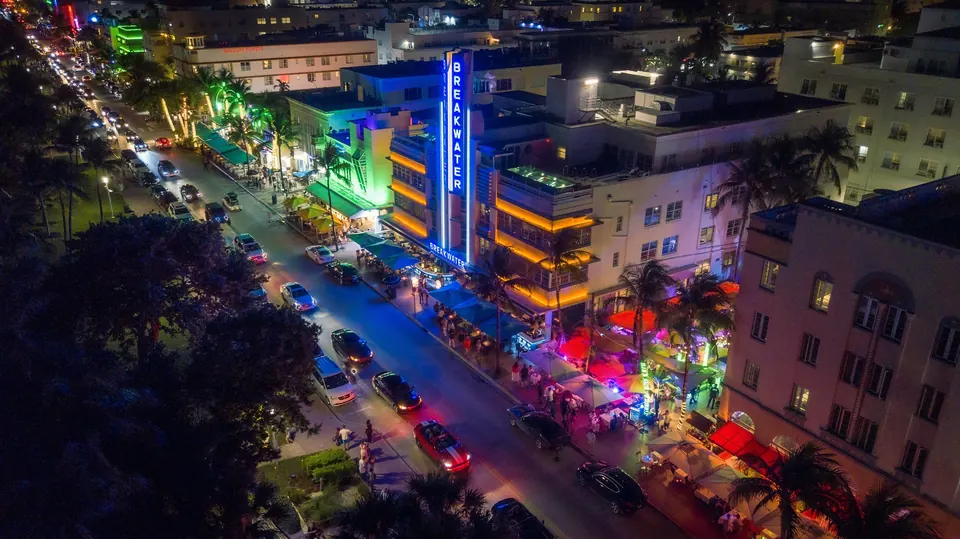
Miami sells a lot of things before they exist. Preconstruction condo towers in Brickell, Edgewater and Sunny Isles Beach are marketed years before residents move in, and many buyers purchase from overseas. An augmented reality app or a Vision Pro walkthrough lets a buyer stand in a sales gallery, or in their own living room, and see the unit layout, finishes and view at true scale in a way a brochure rendering cannot match.
The marine industry has a similar problem. Yacht brokers and dealers around Fort Lauderdale in Broward and along the Miami waterfront sell vessels that may be in another port or still in production. A VR tour on Meta Quest or Vision Pro can walk a buyer through the salon, cabins and helm, and a mobile AR configurator can show hull colors and options at scale, giving a boat show booth something more memorable than a printed spec sheet.
Retailers and brands from the Design District to Aventura can use AR placement and try on to take the guesswork out of buying online, letting shoppers see furniture, lighting, eyewear or accessories in their own space. Museums, galleries and event producers around Wynwood and Miami Beach can add AR layers that give exhibits context and VR installations that give guests something to do beyond taking a photo.
Training is the quieter use case, and often the one with the clearest return. Hospitality groups, healthcare providers and logistics companies across Miami-Dade and Broward can rehearse procedures in VR without risking equipment or guests. We work with clients across Florida and the United States, mostly remotely, as the openly stated sister brand of Best Website Builder Group, and we can deliver test builds to your phones and headsets wherever your team is.
A defined use case, early tests on the target device and a content plan that keeps the experience fresh after launch.
Choose platforms and features in the app estimator, see the price and start with 30 percent down.
We define the user, the setting, the devices and the 3D content you already have or need created.
A rough prototype on the target device to test scale, comfort, input and flow before any polish.
App development and asset production run in parallel, with frequent test builds on real phones and headsets.
App Store, Google Play, Meta Horizon Store, private headset deployment or web release, plus analytics and support.

Plenty of studios can make an impressive demo. Fewer can turn it into a reliable app that passes store review, loads quickly over hotel Wi-Fi at a trade show and still works after the next iOS or Quest software update. We bring app engineering discipline to spatial work: version control, automated builds, crash reporting and documentation, so the experience keeps working long after the launch event.
Comfort and accessibility matter even more in a headset. That means stable frame rates, no forced camera motion, seated and standing modes, text placed at a comfortable reading distance and alternatives for people who cannot use hand tracking. On phones, we provide clear onboarding, sensible fallbacks for devices without AR support and WCAG 2.1 AA contrast on every flat screen in the app.
We also connect AR and VR to the rest of your business. Listings can pull from your inventory system, leads captured inside an experience can flow to your CRM, and your website can link straight into a WebXR view. Our web, AI and app teams work together, which keeps a spatial project from becoming an isolated marketing toy.
You own what we build. Source code, 3D assets, store listings and developer accounts are in your name. When a new headset generation arrives, the assets and logic can usually move forward with it, and support plans cover platform updates and new content.
Most spatial projects that disappoint fail in planning, not in engineering. The experience was built because the technology looked exciting, without a clear picture of who would use it, where they would be standing and what they should do afterwards. Answering those questions first is the cheapest way to make augmented reality app development pay off.
Start with the setting. A buyer in a sales gallery with a host beside them can comfortably wear a Vision Pro for ten minutes. A shopper browsing on a phone at night gives you a few seconds before moving on. A trainee in a warehouse may need gloves on and both hands free. Each setting points to a different device, interaction model and session length, and the right choice usually becomes obvious once the setting is clear.
Next, decide what success looks like. For real estate and yachts it might be booked tours or deposits, for retail it might be fewer returns or better conversion on product pages, and for training it might be fewer errors on the job. We build analytics around that goal so you can tell whether the experience is working instead of relying on impressions.
Then plan content for the long run. 3D assets are often the largest cost in an AR or VR project, and they are also the part most likely to change as units sell, products update or procedures evolve. A simple content pipeline and update process, set up front, keeps the experience current without paying for a new release every time a listing changes.
Finally, prove it small. A focused pilot on one device, one product line or one training module shows real user behavior within weeks of launch. If it works, the same code and assets can expand to more platforms, more content and more locations, with real numbers to support the next investment.
AR and VR builds start at $25,000 in our app estimator because they combine app development, 3D content and device testing. The price depends on platforms, the number and complexity of 3D assets and any integrations. Estimates above $60,000 begin with a conversation with a senior strategist.
Phones reach the most people, the web removes the download step, and headsets deliver the most immersive experience for smaller audiences such as sales galleries, training rooms and events. Many projects start on one platform and expand once the experience proves its value.
Yes. Our Vision Pro app development work uses SwiftUI and RealityKit, from spatial windows and 3D product volumes to fully immersive environments, and we handle App Store submission for visionOS.
Yes. We build standalone VR and passthrough mixed reality apps for Meta Quest, distributed through the Meta Horizon Store or privately to your own headsets for training and events.
AR places digital content over the real world, usually through a phone camera. VR replaces your surroundings with a fully virtual space. Mixed reality headsets blend the two, showing the real room through cameras while digital objects stay anchored in place.
No. If you have CAD files, architectural models or product renders, we can convert and optimize them. If not, we create the 3D assets as part of the project and include that work in the estimate.
Yes. WebXR and AR Quick Look let people view 3D models in their space straight from a web page or QR code on supported devices, which works well for product pages, listings and campaigns.
Focused mobile or web AR experiences typically take a couple of months, while headset apps with custom 3D environments take longer. Your estimate defines the scope, and you test builds on your own devices throughout.
Yes. We can configure private distribution, a locked launch experience and content updates across a fleet of headsets, and plan charging, cleaning and reset routines with your team.
Fast Lane Websites are fixed-price builds that launch in 7 to 10 business days. Pick your size, add hosting, choose to pay in full or put down a deposit, and we start the same week.